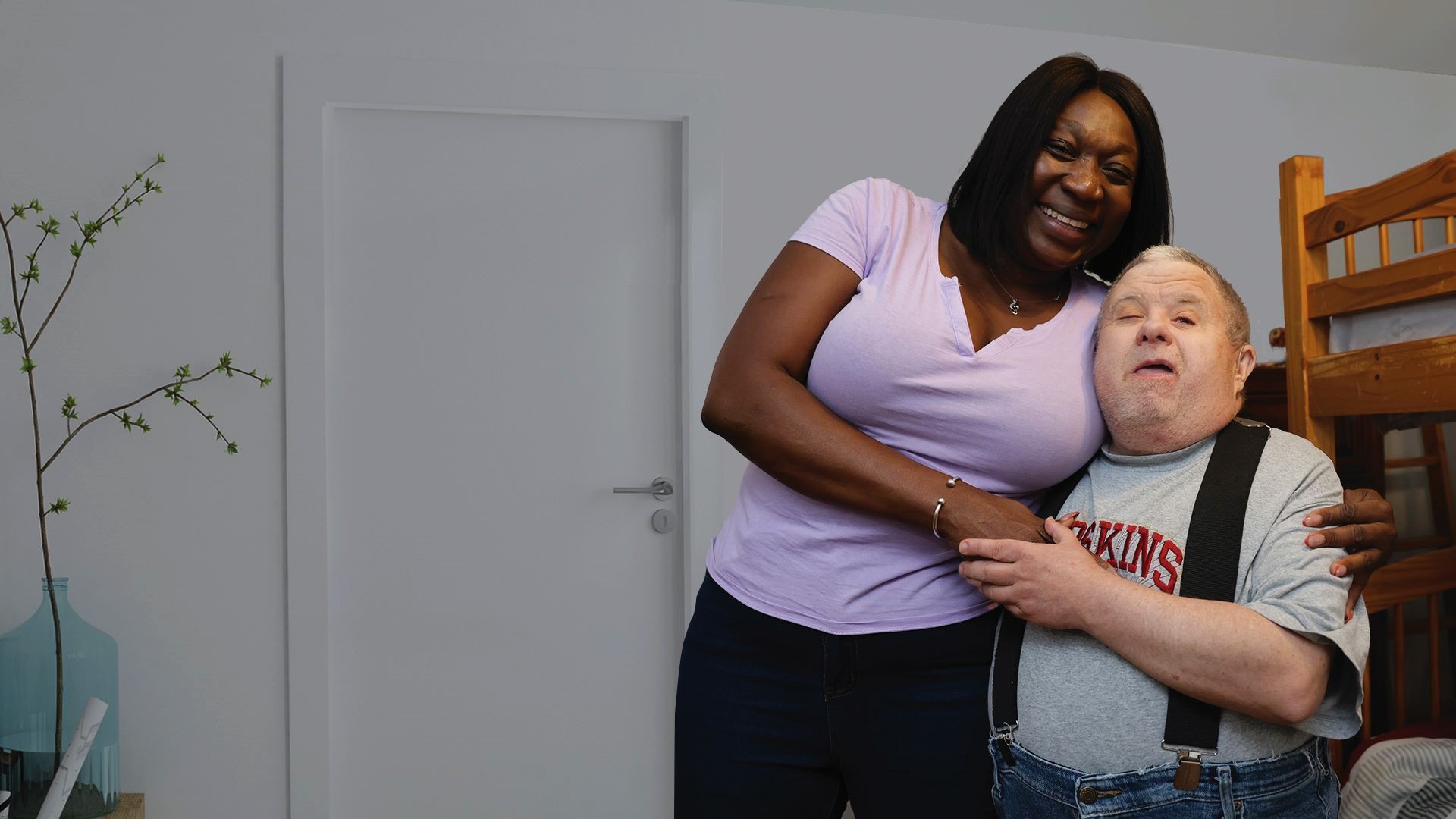
Housing Issues for People with Disabilities
Being part of the community and living as independently as possible are among the most important values and goals shared by people with disabilities, their families, and advocates. A home of one’s own – either rented or owned – is the cornerstone of independence for people with disabilities. However, across the nation, people with intellectual and developmental disabilities (I/DD), and other disabilities, face a severe housing crisis.
Affordability
The affordability gap for people with disabilities has exponentially worsened in recent years. According to Priced Out in 2010, over 4 million Americans with disabilities who rely on federal monthly Supplemental Security Income (SSI) have incomes less than $8,500 per year – low enough to be priced out of every rental housing market in the nation. In 2010, the average rent for a one-bedroom apartment was $785 per month – far higher than $703, the maximum monthly SSI payment across all states, for people living independently.
Accessibility
An accessible home offers specific features or technologies to accommodate people with disabilities, such as lowered kitchen counters and sinks, roll-under stoves, widened doorways, wheel-in showers and raised electrical outlets. For people who use wheelchairs or other mobility devices, finding housing with even basic accessibility features (e.g. an entrance with no steps) ranges from daunting to impossible. In addition, accessible units can be very costly to rent or purchase.
Aging Caregivers
Across the U.S., over 700,000 people with I/DD live with an aging caregiver (over age 60). As this generation of caregivers continues to age, many of their adult children with I/DD may be forced to live in large congregate facilities or other inappropriate places like institutions due to the shortage of housing and support services.
Availability
The supply of affordable, accessible housing linked to supportive housing is far less than the need. Programs at the U.S. Department of Housing and Urban Development (HUD) that seek to increase availability include:
Section 811 Supportive Housing for Persons with Disabilities. Section 811 is the only HUD program dedicated to producing affordable, accessible housing for non-elderly, very low-income people with significant disabilities. Section 811 was recently modernized by the Frank Melville Supportive Housing Investment Act to make the program more efficient and to substantially increase the number of permanant supportive housing units that the program creates. As modernized by the Melville Act, Section 811 housing is typically integrated into larger affordable housing apartment buildings, and is linked with voluntary supports and services. Tenants pay 30 percent of their adjusted income for rent which ensures affordability for people who receive SSI.
Section 8 Housing Choice Vouchers. HUD's Section 8 Housing Choice Voucher program helps very low-income families, the elderly, and people with disabilities afford rental housing in the private market. Approximately 28% of households using Section 8 vouchers are headed by a non elderly (under age 62) person with a disability. Tenants must be low-income, and typically pay 30 percent of their income for rent. Participants must find their own housing, but can choose any housing that meets the requirements of the program. Due to limited funding and high need, most parts of the country have long waiting lists for Section 8 vouchers.
Public Housing. HUD public housing comes in all sizes and types, from scattered single family houses to high-rise apartments. Approximately 22% of households living in public housing are headed by a non elderly (under age 62) person with a disability. Tenants must be low-income, and typically pay 30 percent of their income for rent. Like Section 8 vouchers, availability is limited and applicants may be on waiting lists for years.
National Housing Trust Fund. The National Housing Trust Fund (NHTF) is a new, dedicated fund that will provide grants to states to build, preserve, and rehabilitate housing for people with the lowest incomes. The NHTF was established by the Housing and Economic Recovery Act of 2008 (P.L. 110-289). For FY2012, HUD is seeking $1 billion to start up the NHTF.
Housing Discrimination
People with disabilities all too often face discrimination when seeking housing. In fact, the majority of discrimination complaints received by HUD are by people with disabilities (over 53 percent). Multiple federal laws prohibit discrimination against people with disabilities in public and privately funded housing. Learn more on The Arc’s Civil Rights page.