
The Arc’s History: Disability Rights and Inclusion Since 1950
In 1950, little was known about intellectual and developmental disabilities. There were virtually no programs or activities to support people with IDD or their families, and no laws to protect them against discrimination or exclusion. It was common for doctors to tell parents that the best place for their child with a disability was in an institution, where they were often hidden away from society and denied an education or proper care.
But some families refused to accept that. They wanted their loved ones to lead fulfilling lives in the community, not be locked away in institutions. The Arc was born from their determination to keep their children at home and change what society believed was possible for people with disabilities.
Since then, The Arc has helped drive major disability rights advances and build a network of state and local chapters.

The Arc’s Name, Disability Language, and Respect
Language shapes how people are treated. Some of the words once used in medicine, education, and public policy to describe people with disabilities became deeply harmful. In society, they were used to insult, exclude, and dehumanize people with intellectual and developmental disabilities.
As people with disabilities and families spoke out, The Arc listened. We changed our name to reflect the leadership of people with disabilities and our belief that every person deserves dignity and respect. We also continue to lead the fight to remove the R-word from laws and public conversation.
What does The Arc stand for?
The Arc is not an acronym. “The Arc” is the name of our organization and doesn’t stand for other words.
The Arc stands for and with people with disabilities, working toward a world where they are valued and included.
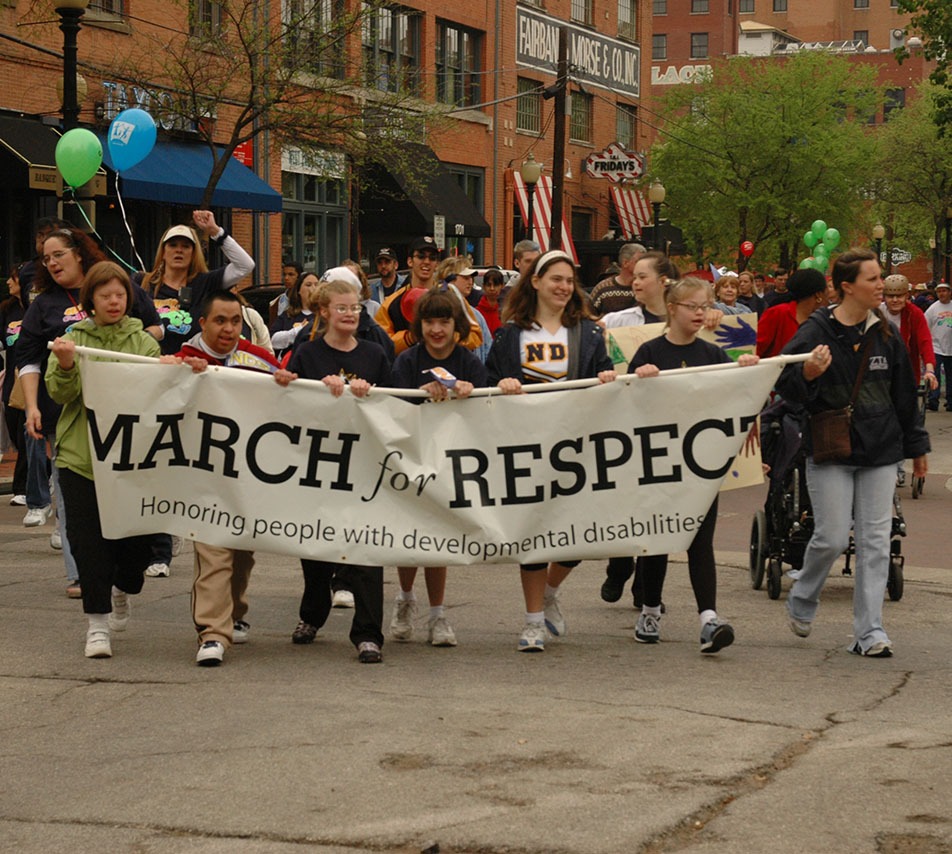
We don’t use or accept outdated and harmful language. We use terms like “intellectual disability” and “developmental disability,” and the only R-word we use is respect.
Former Organizational Names (Historical)
Our former legal names included outdated language that we reject today.
1953 – 1973: National Association for Retarded Children (NARC)
1973 – 1981: National Association for Retarded Citizens (NARC)
1981 – 1992: Association for Retarded Citizens of the United States (ARC)
1992 – Present: The Arc of the United States (The Arc)
Note: The Arc should never be used as an acronym. Always refer to us as The Arc.
Timeline: The Arc’s Impact Through the Years
The Arc’s work has helped change what’s possible for people with disabilities and families, from access to education and healthcare to stronger civil rights protections. Here are key moments from 1950 to today, including milestones connected to Medicaid, SSI, IDEA, and the ADA.
1950s: The Arc Is Founded and Disability Advocacy Grows
One of the earliest organizations that later became a chapter of The Arc was the Children’s Benevolent League, incorporated in 1936 in Washington state.
In 1950, parent groups from across the country met in Minneapolis, Minnesota, to formally organize The Arc and expand community services and civil rights for people with intellectual and developmental disabilities (IDD).
The Arc was an early national organization to invest in research on intellectual and developmental disabilities, including urging Congress to support an International Research Plan.


1960s: Federal Disability Policy, Medicare, and Medicaid
The Arc opened its Governmental Affairs office in Washington, DC, to focus on national disability policy and advocacy.
The Arc brought disability into federal decision-making by serving on the first President’s Panel on Intellectual Disability (then called Mental Retardation).
The Arc’s advocacy, alongside other organizations, helped secure passage of Medicare and Medicaid, expanding access to healthcare for millions.
The Arc helped bring national attention to lead poisoning and its harmful effects on infants and children.
1970s: SSI, Education Rights, and Community Living
The Arc advocated for the creation of Supplemental Security Income (SSI) to provide financial stability for people with disabilities with little or no income.
The Arc worked with other organizations to advance the Developmental Disabilities Services and Facilities Construction Amendments of 1970 and subsequent amendments.
The Arc of Pennsylvania’s PARC v. Pennsylvania case established the right to a free public education for children with disabilities, which The Arc
of the United States used to pave the way for the Individuals with Disabilities Education Act (IDEA).
As community-based services expanded, more people began leaving institutions to live in the community.
With research funding support from The Arc, Kenneth Jones, MD defined Fetal Alcohol Syndrome.
1980s: HCBS, Employment, Housing, and Early Education
The Arc pushed for protections so infants with disabilities couldn’t be denied medical treatment, defining that denial as child abuse. We also conducted a survey of state genetic screening programs that led to a central listing of each state’s infant screening tests.
The Arc made community living possible for millions by helping secure passage of the Medicaid Home and Community-Based Services (HCBS) waiver.
The Arc helped create the Supported Employment Program within the Rehabilitation Act of 1973, and successfully pushed Congress to add disability as a protected class under the Fair Housing Act.
The Arc helped pass legislation expanding education services for infants, toddlers, and preschoolers.
1990s: The ADA and Olmstead Expand Disability Rights
The Arc was a leader among national disability organizations advocating for the passage of the Americans with Disabilities Act (ADA), the landmark civil rights law that has transformed public life.
The Arc submitted an amicus brief in Olmstead v. L.C. at the U.S. Supreme Court, cementing the right to receive services in the most integrated setting possible.
The Arc received a U.S. Department of Energy grant to educate the community about the ethical, legal, and social implications of the Human Genome Project.
The Arc received a Centers for Disease Control and Prevention grant to support the development and dissemination of the Fetal Alcohol Syndrome Resource and Materials Guide.

2000s: Education, Employment, and Global Disability Rights
The Arc participated in drafting the United Nations Convention on the Rights of Persons with Disabilities.
The Arc won expanded provisions in the Individuals with Disabilities Education Act (IDEA) and the Higher Education Act to help students transition from public school to higher education, employment, and adult life.
The Arc, in collaboration with the American Association on Intellectual and Developmental Disabilities, published National Goals and Research for People with Intellectual and Developmental Disabilities, highlighting barriers to achieving the government’s promise to people with disabilities.
2010s: The ACA, Rosa’s Law, ABLE, and Medicaid Advocacy
The Arc worked with other organizations to secure passage of the Affordable Care Act, expanding access to comprehensive health coverage and strengthening consumer protections and nondiscrimination provisions.
The Arc drove advocacy for Rosa’s Law, which replaced the outdated term “mental retardation” with “intellectual disability” in federal policy.
The Arc supported passage of the ABLE Act, creating tax-advantaged savings accounts for people with disabilities that are exempt from means-testing in federal programs.
The Arc was instrumental in defeating attempts to block grant and cap Medicaid, protecting access to health care and long-term services and supports for people with disabilities.


2020s to Present: Protecting Disability Rights and Services
The Arc mobilized information and advocacy during COVID-19 so people with disabilities and families weren’t left out of care, services, or safety.
The Arc defended Medicaid and education against renewed threats, organizing with people with disabilities and families to protect what helps them thrive.
The Arc received a bipartisan House resolution for its 75 years of leadership in disability rights across party lines.
Today, The Arc works with people with disabilities, families, and chapters nationwide to protect civil rights and strengthen the services and supports people count on in everyday life. Our history isn’t only what we’ve achieved. It’s what we keep building, so people with disabilities can live and participate in community life on their own terms.
Learn more about our impact right now in our latest annual report.
The Arc’s Mission, Values, and Position Statements
Looking for the basics? These pages explain what The Arc does, what we believe, and how we approach disability issues.



The Arc promotes and protects the human rights of people with intellectual and developmental disabilities and actively supports their full inclusion and participation in the community throughout their lifetimes.